


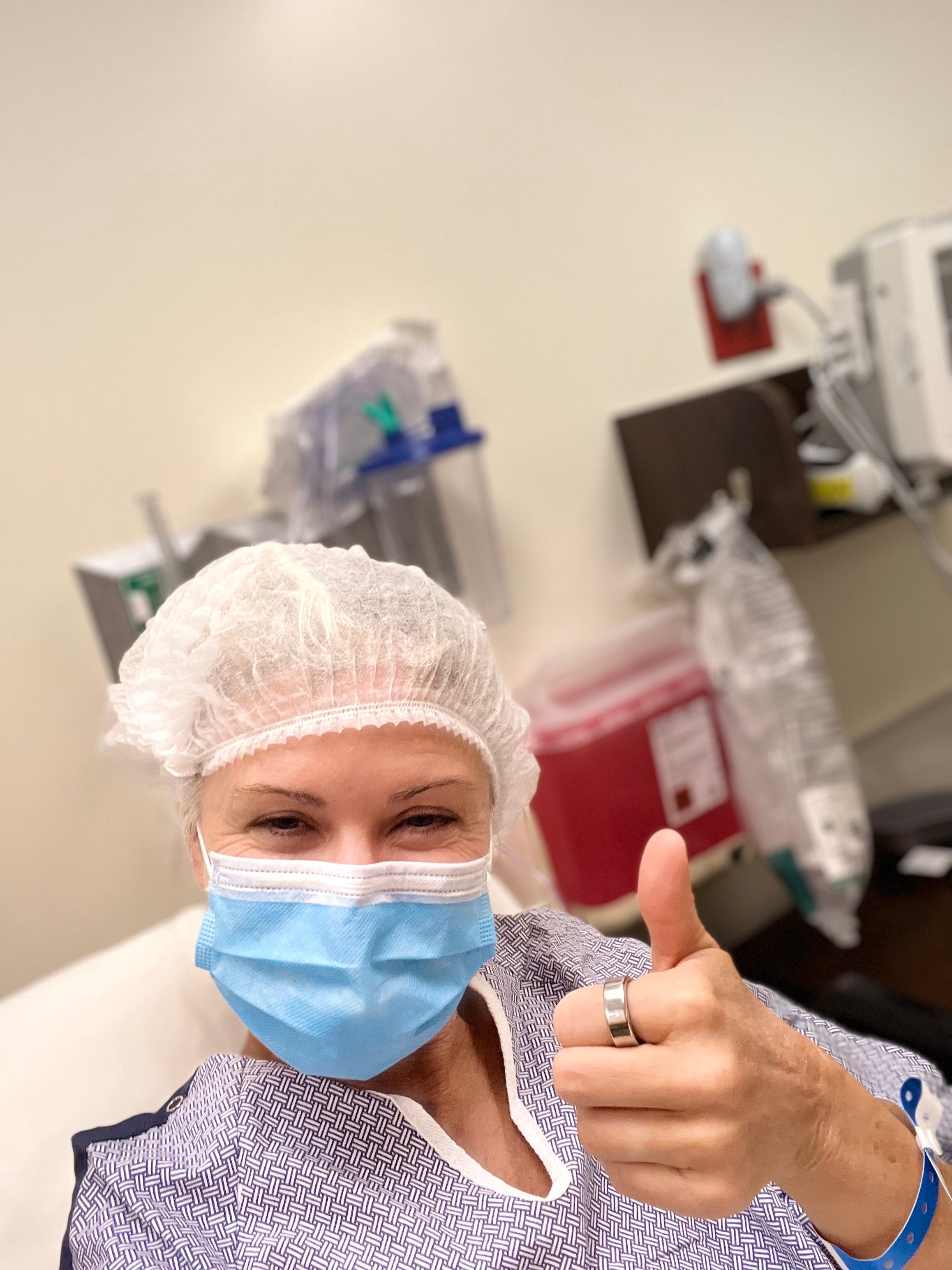
Today I gained some clarity about the people I’m trying to help.
My goal is to reach people who still have time to change the trajectory of their later years—before illness, frailty, or loss of independence begins narrowing their choices.
Part of that means living well: exercising, eating nutritious food, protecting our bones, and taking care of our mental and cognitive health. But it also means paying attention. Not going overboard and worrying about every little thing but being mindful of what’s happening. Some serious diseases develop quietly, and our job is not to miss them.
I nearly missed mine.
During the COVID years, I ignored a pine nut-sized lump next to my ear. It was there for a few years without causing any trouble before I even asked about it. It wasn’t painful. It was mobile, beneath the skin, and hadn’t noticeably enlarged for some time. Then it grew. I told myself it was a benign cyst or perhaps a calcified lymph node.
Being a doctor did not make me immune to denial, avoidance, or convincing myself that something was probably nothing.
Eventually, I went to my doctor because I had pain in my knee, hip, back, and shoulder. I was a bit of a musculoskeletal mess. Near the end of the visit, I casually brought up the lump because it seemed to have grown slightly.
“Oh, by the way, what do you think of this?” An aside. I mentioned the thing that could have killed me as an aside.
My doctor referred me to an ENT. Even then, I questioned the referral. Why wasn’t she sending me to a dermatologist? I was still convinced it was a cyst, never once thinking it was a tumor.
The ENT promptly scheduled a biopsy. The result came back in January 2022 as a benign pleomorphic adenoma, a type of salivary-gland tumor. My ENT explained that these tumors can sometimes become malignant and recommended that I meet with a surgeon to discuss excision.
I wasn’t eager to have surgery. I was told it was a very slow growing benign tumor that only rarely converts to malignant cells so I assumed it wouldn’t need to happen anytime soon.
The possibility of facial-nerve paralysis frightened me more than the possibility of cancer. The facial nerve runs directly through the parotid gland (where my tumor was sitting), so removing a parotid tumor carries a risk of nerve injury. I had already experienced facial paralysis twice from Bell’s palsy. I knew exactly what it felt like, and the thought of it becoming permanent scared the hell out of me.
Parotid tumors were also completely outside my area of expertise. I had barely heard of them in medical school. As a family and sports medicine physician I understood musculoskeletal injuries and Bell’s palsy. This was unfamiliar, and unfamiliar risks are surprisingly easy to minimize—even when you’re a physician.
Fortunately, my best friend from medical school and my husband both encouraged me not to delay. I listened. Four months after the biopsy, I had surgery. I found the most experienced ENT who specialized in removing parotid gland tumors and even fixing the facial nerve done by other doctors who didn’t do it quite right. I flew to Beverly Hills with my husband for what I thought was just to remove a benign little tumor.
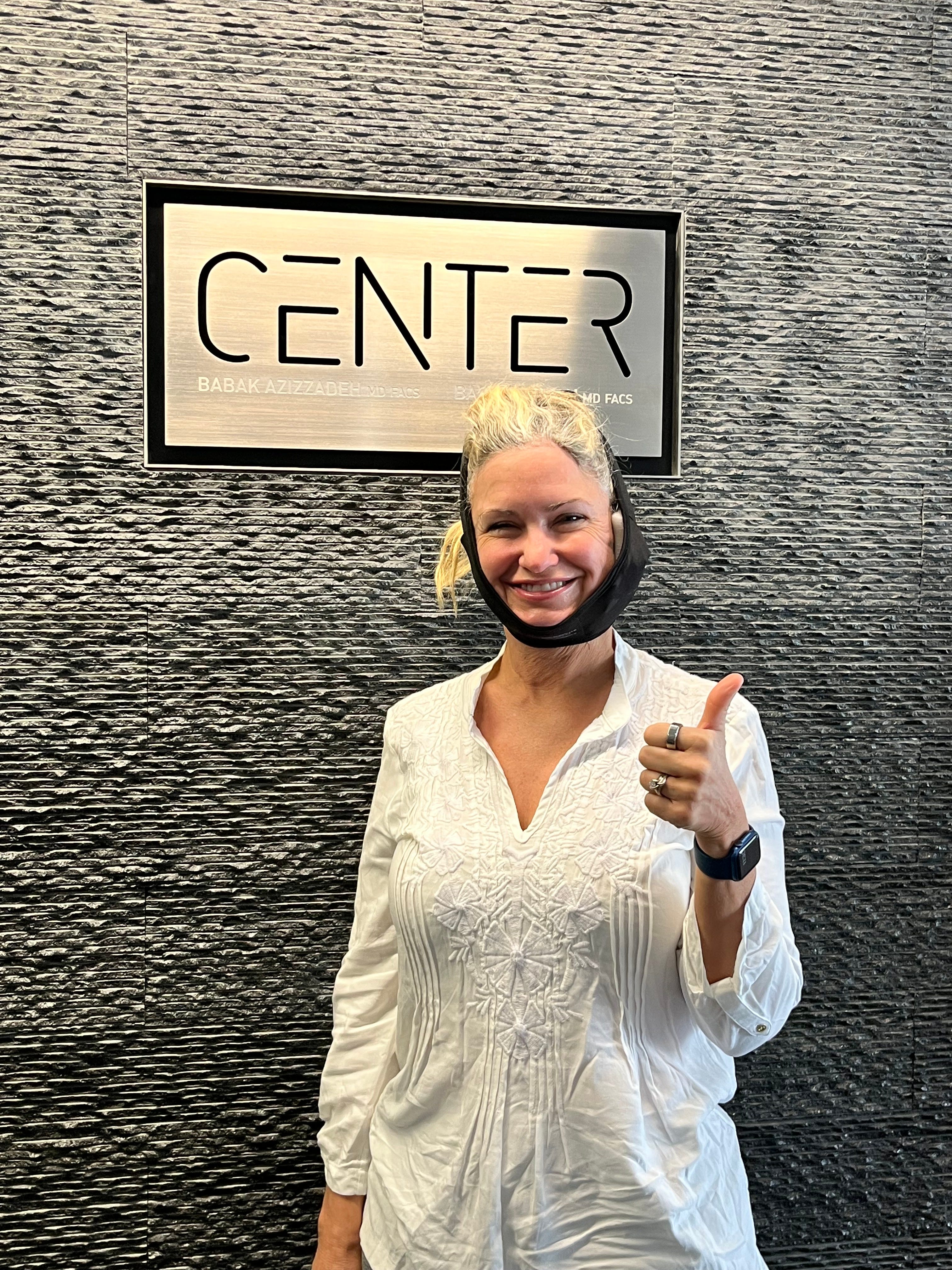
However, a week later the final pathology showed that a portion of the tumor was malignant. I can’t know whether that transformation occurred during those months or whether the original biopsy simply sampled the benign portion. Either way, the reassuring biopsy had not told the whole story.
My surgeon told me that waiting longer could have led to a much worse outcome. I felt so lucky. And so foolish. I had come frighteningly close to letting fear and false reassurance make the decision for me.
Because cancer was found, surgery wasn’t the end of my treatment. I needed radiation therapy to the left side of my face and neck. Before treatment began, a rigid plastic mask was molded to my face and shoulders. During every session, my head and shoulder were snapped down onto the treatment table to hold my head completely still.
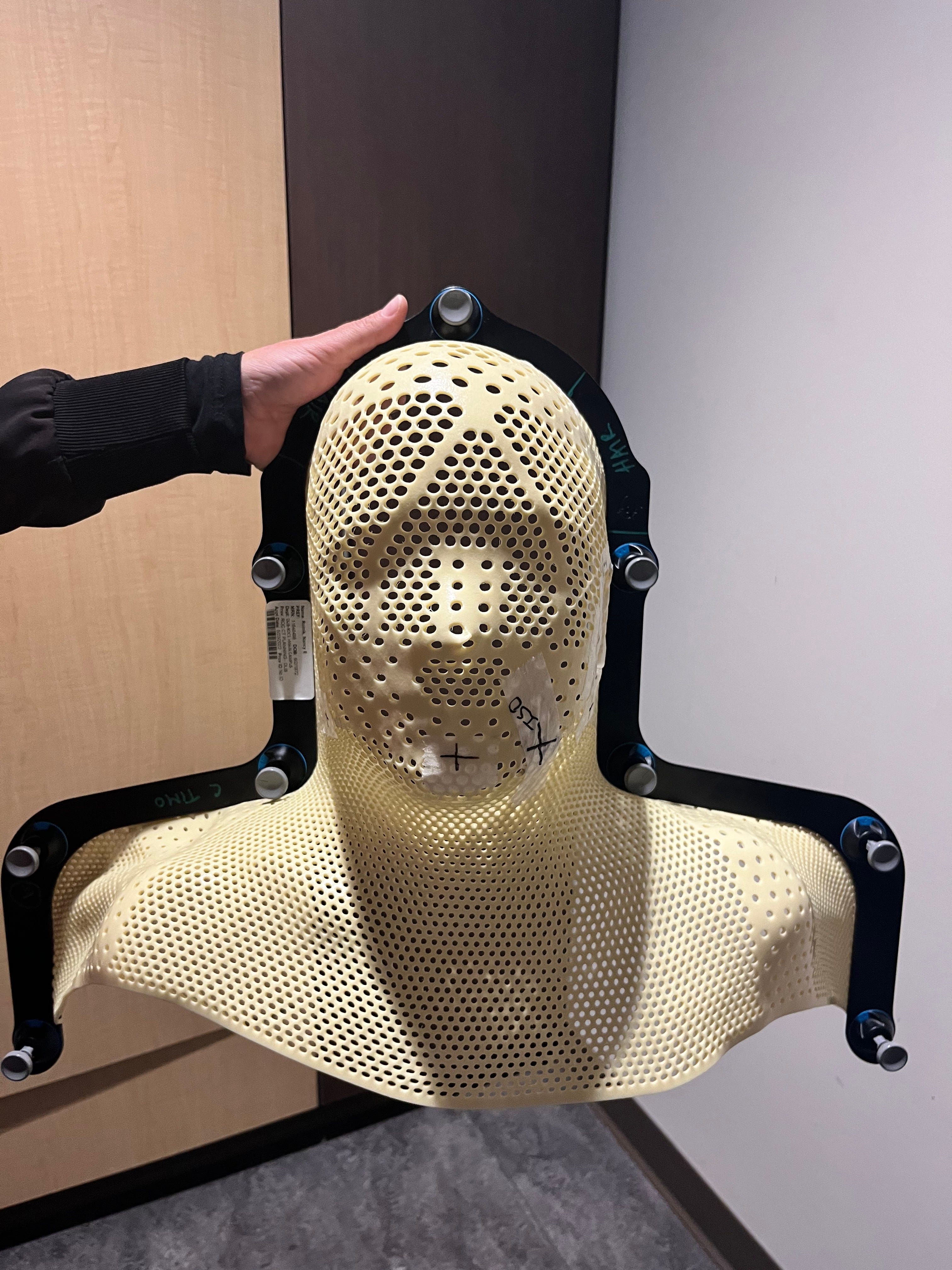
As someone who is claustrophobic, I dreaded that mask. I initially needed Ativan but I learned to tolerate it, one treatment at a time.
Throughout those weeks, I watched other patients finish their treatment and ring the cancer bell while everyone nearby cheered. I looked forward to my turn. Then I developed COVID during my final week of care. It didn’t interrupt my radiation schedule, but I had to remain isolated from the other areas of the center—including the hallway with the bell.
I never got to ring it.
At the time, that made me sad. Looking back, it was a minor disappointment in a story that could have ended very differently.
This July, I passed the four-year anniversary of completing treatment. I am profoundly thankful that my lack of urgency did not cost me more than it did.
I’m not sharing this story to make anyone panic over every bump, ache, or strange sensation. The goal isn’t hypervigilance. It’s timely attention. Keep up with your preventive screenings. Notice meaningful changes in your body. Mention the concern that feels too small or unimportant. Follow through when your doctor recommends further evaluation. And don’t let fear of what might be found—or fear of the treatment itself—keep you from getting an answer.
Mine is a cautionary tale. Please don’t ignore your shit. Book the appointment and ask the off-the-cuff question. Follow through on the referral.
You have people who love you, depend on you, and want you here for a very long time. And you still have time to change the trajectory of your older years—but only if you act while you have that time.
Today I shared a vulnerable mistake I made and ask that you’ll restack my essay so others can avoid making my mistake. Or better yet share it to a friend who needs to stop ignoring their shit. Time is a factor in how diseases are treated and the earlier things are identified typically the better the outcome. Be healthy friends.
“Being a doctor did not make me immune to denial, avoidance, or convincing myself that something was probably nothing.”
That admission gives the piece unusual authority. Medical knowledge doesn’t magically abolish the very human impulse to bargain with frightening possibilities. I particularly appreciate the distinction between hypervigilance and timely attention: noticing isn’t panicking. Sometimes the consequential question really is the one casually added at the end.
Candid. Sobering. Valuable. I'M SUBSCRIBING!
I write at The Reflective State—do visit sometime.
Thank you Nancy❤️. I am getting that mole checked out. Appt being made. I listened🫶🏼